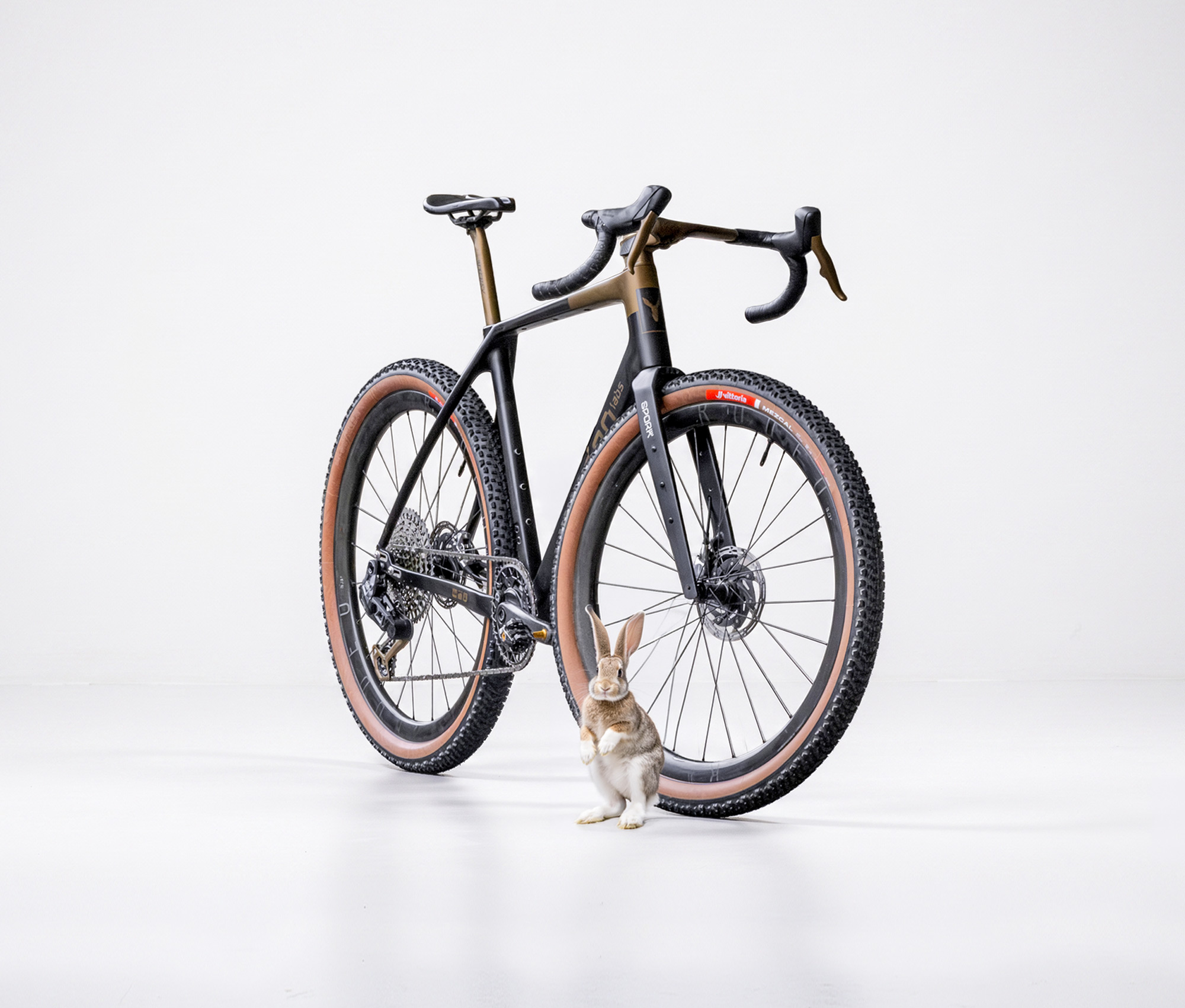
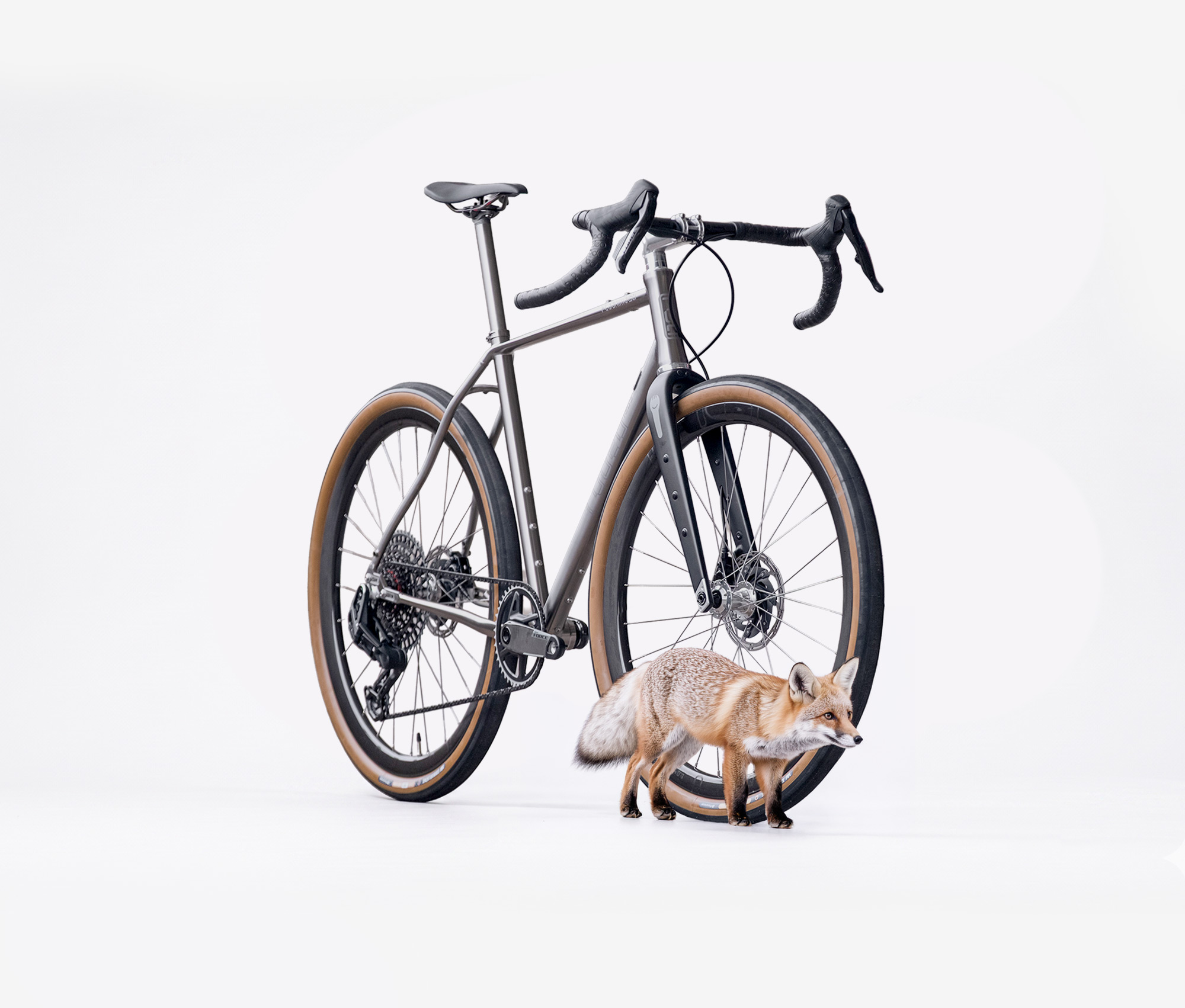
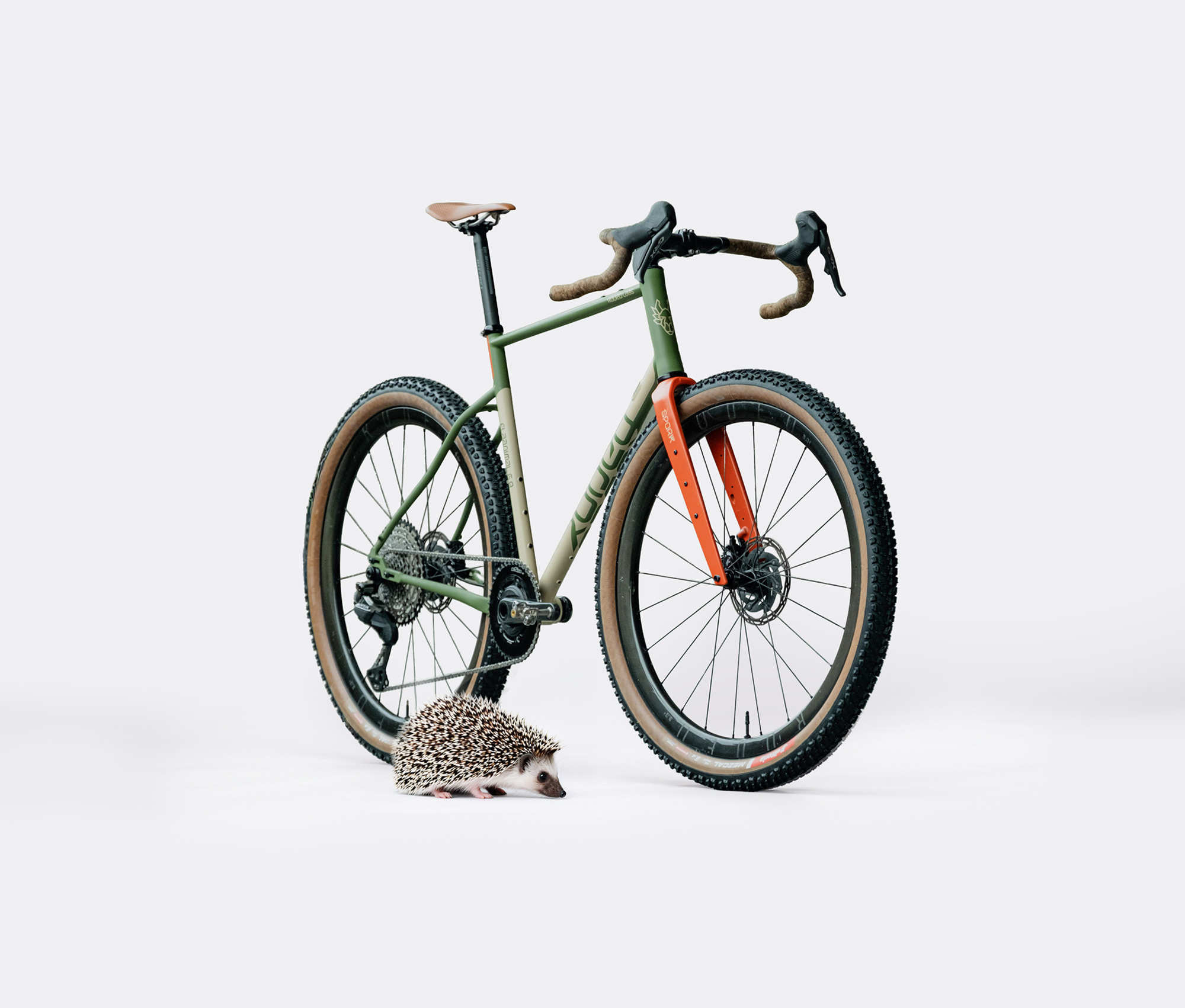
One of our favorite types of commissions we receive at Rodeo are custom painted frames. When we receive a request for custom paint we walk the owner through what to expect on each step.
Step 1: Commit to the custom design process by purchasing your frameset.
Step 2: A discussion about what the inspiration will be and what themes the owner would like to weave into the design of the bike.
Step 3: We translate those themes into digital 2d design representations. These act as the official design representation with the applicator.
Step 4: We confirm pricing, shades of color, and get your approval to proceed.
Step 5: Your frameset is handed off to our painter or in-house Cerakote team. Turn around time is typically 3-6 weeks depending on complexity and how many bikes are in our current finishing queue. We’ll give you a more precise lead time estimate once your custom design is completed and approved.
Step 6: We assemble the final bike or ship the completed frameset to you.
The end result is a Traildonkey or Flaanimal that is totally unique.
A note on the design process- With decades of design experience represented in our staff, we are typically very efficient at translating design themes that customers bring to us into totally unique and resolved final designs. Because of this, we don’t typically add design time as an additional line item cost in our custom paint process. However, there are are scenarios where a requested design is extremely complicated to execute, or other times where a design is presented and the customer pivots to a significantly different design concept. In those cases, it will sometimes be necessary to add a $80/hr design time line item to the cost of the custom paint process.
We offer custom finishes in Cerakote in addition to liquid paint. Below is a table outlining the differences between the two.
Cerakote Liquid Paint Gloss Level mostly satin, some high gloss possible depending on individual color properties. Satin to high gloss Thickness Very thin. Multiple colors increase thickness. Thick, especially with multiple colors Weight 30-60g 150g-400g per number of colors Abrasion resistance High for its thickness, but it is thin. Thicker, so more layers to before wear through Chipping Pin prick chips. Very small. Larger chips. Chips can propogate. Cost Less expensive. In-house at Rodeo 50% more expensive. External contractor. Graphics Tactile edges to graphics. Edges can be raised. Each masked layer has edges. Graphics smoothed by clear coat Turn around time Typically 4-6 weeks. Can be weeks to months. External contractor. Prismatic effects Yes, set colors from the FX series. Yes, unlimited spectrum Environmental Impact VOC exempt. Made In USA. Highly toxic. Sourced globally. Frame protection Protect with Ride Wrap for longest life Protect with Ride Wrap for longest life
Cerakote has unique qualities compared to liquid paint. It is a very thin polymer / ceramic coating with the pigments / solids suspended in the polymers. For each color the composition of the coating can be quite different based on different methods developed to give the coating it’s desired look. At the same thickness, Cerakote outperforms liquid paint pretty dramatically for durability. Cerakote is applied at approximately 1 mil of thickness and paint at about 6 mil of thickness, so Cerakote ends up being much lighter as well as it relates to the coating. Both finishes can scratch and rub off over time if for instance a bikepacking bag rubs against a frame or dirty parts contact each other regularly. Paint can take longer to rub off due to it’s increased thickness but Cerakote does not flake and chip the way paint does.
Anywhere that bags or straps rub against a frame will develop wear marks or bare spots with both paint and Cerakote, but it will happen much, much quicker with Cerakote than liquid paint because of how thin Cerakote is. The only way to properly protect a frame from bag / strap rub is to fully cover those areas of the frame with frame protection such as Ride Wrap or 3M clear bra, or “helicopter tape”.
Cerakote It tends to get tiny nicks that don’t spread vs chips on paint that can slowly grow larger and fail more visibly. Inversely, Cerakote can’t really be touched up, at least not yet. Once it is on that’s pretty much it and if you add wear and tear to your bike consider it patina vs trying to keep the bike “perfect” forever. We do offer RideWrap protection at an additional charge if you’d like to rest easier knowing your frameset is armored for whatever you plan on throwing at it.
Cerakote does have metallic and color shift options, which can be very cool.
Cerakote doesn’t offer a mirror gloss finish like traditional liquid paint. It tends to go on more matte or satin for most colors.
Liquid paint will have a larger color spectrum and more niche finish options like prismatics and flakes.
Click here for more info about Cerakote and how it compares to liquid paint, as detailed in a recent Rodeo Journal entry.
Cerakote pricing is as follows:
$700 for the first color, which includes intial design time allowance and base frame prep.
$250 for each additional color
A certain amount of masking and detail are included in the above tiers. If masking gets detailed or complex, there could be an additional complex masking fee (generally around $100-$300 if needed).
We love repainting Rodeo bikes. We do not paint bikes from other brands.
If you’re having your Rodeo repainted and the bike is used or dirty, there may be a $100 cleaning fee involved in prepping the bike and parts for repaint.
If you are purchasing a titanium frame (Flaanimal) we can also incorporate anodizing into your design scheme. For more information about this process, see our custom anodizing page . Anodizing generally follows Cerakote pricing, but can sometimes come in lower depending on how much actual frame coverage there is.
If you’d like to discuss a custom finish project with us, please click here to get in touch.
Completed project gallery
Renderings